
Romans 5 - The Cross & God Dies
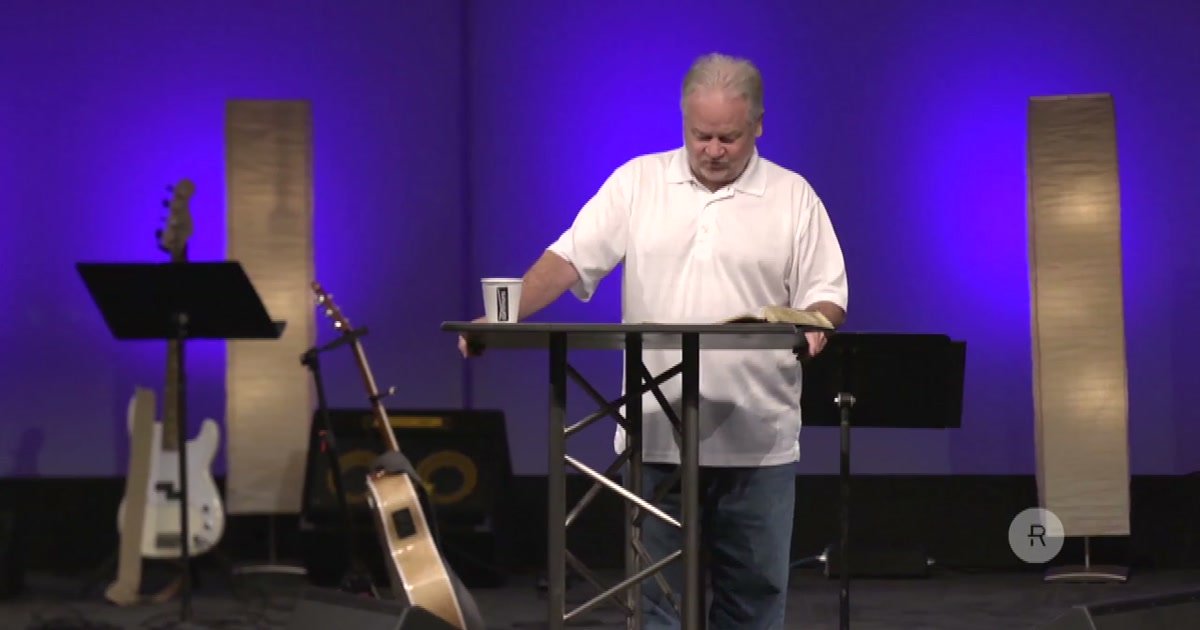
Tom Shrader explores the heart of the gospel through Romans 5, explaining that all humanity is born into sin and separated from a holy God who demands justice. He teaches that Jesus Christ, being both fully God and sinless man, died on the cross as our substitute—taking God's wrath upon Himself so that believers might be declared righteous. This great exchange demonstrates both God's justice and His love.
“Every sin that's ever been committed will be paid for in one of two ways: either by Jesus on the cross stamped paid in full or by the one who commits that sin on their own for all eternity never paid in full.”
— Tom Shrader
Series: Doctrine
Recorded: 2011
Duration: 57 min
Themes: salvation, sin, grace, justice, love, forgiveness, redemption, hope, struggling with guilt, new believer, feeling condemned, questioning salvation, doubting god's love, searching for meaning, seeking forgiveness, pastor
Scripture: Romans 5:1, Romans 5:6, Romans 5:8, Romans 5:10, Romans 5:12, Romans 6:23, 2 Corinthians 5:17-21, Luke 1:68, John 10:11, Titus 2:14, Galatians 3:13, Romans 1:18, Romans 3:23, Romans 3:26, 1 John 2:1, 1 John 4:10, Matthew 20:28, 1 Corinthians 6, Galatians 5:1, Ephesians 2:1-4, John 3:16, Romans 8, Galatians 2:20, Revelation 1:5
Theological Themes: substitutionary atonement, justification, original sin, wrath of god, imputation, righteousness, penal substitution, sanctification
Full Transcript
If you have a Bible, open it to the book of Romans. If you don't have a Bible, raise your hand, and the guys will bring you a copy that you're welcome to take with you. It's page 612. We are, if you're a Seinfeld fan, you're familiar with the summer of George. This was to be the summer of Tom, the way things were all set up. This was the ultimate summer for Susan and I to be away a bunch, and we were supposed to be out of town right now.
I'm supposed to be in Flagstaff, as a matter of fact, but we didn't go. Susan had some problems. They're non-cancer problems, but we ended up staying in town. Those of you that followed the saga, we are in our 10th day with no air conditioning in the house, but that's okay. If it was warm, it would matter, but it's not bad, so we moved out finally. We've got a part that's supposed to be done today, so we're looking forward to that.
Since I was in town, I said, if I'm in town, I'm going to teach, even though it wasn't scheduled to, because I want credit. I'm building up frequent teaching miles so that when it gets to fall, I'm not going to be here if I can work it out. Amazing, people call the switchboard to ask who's teaching where. I'll be teaching here for at least this weekend, at least the next two weeks, and in August, every other week is my schedule. Actually, as this turns out, we'll be in town more this summer than any summer that we've had. We make plans. God knows what He's doing.
Please pray for Susan. She's in a lot of pain, and we're dealing with it, and you all ask. That's why I tell you there's nothing you can do beyond pray for her, but she's just in a lot of pain, and the doctor's answer is we don't know. We know it's not cancer-related, at least it doesn't look like it's cancer-related, so just a bunch of those issues. We're like you, like everybody else. We have the same issues.
Finding Joy in Sequential Teaching
I'm here because I love you, but it's a one-way thing. I feel like a jilted lover. I feel like I've asked you to prom, and you said no to me, but here I am. I say this every week: I'm really getting into this series, and I was okay with it when we started, but every week, more and more, I just really enjoy this opportunity to kind of work in a way that's sequential and logical through the scriptures. It's all flowing out of the scripture. I found something, and I put it in the lesson today from Jim Boyce that I want to use kind of at the end that I found to really be fascinating.
This is week eight of this series, and the topics you have in the circle, starting clockwise, kind of at one o'clock on your bulletin. If you're following along in the book that Driscoll's written called Doctrine, you know where we are. We're on the cross. If not, we have some copies left. We've sold over 1,000 copies of that book, and that's just great. That's how many people are tracking along with us on video, study guides, so it's really good.
Within this eight weeks, we said there's like a little mini series in here of three weeks on the incarnation, the cross, and the resurrection, and we're drawing some hard lines in each one of them, but you'll see them overlap. You can't just, none of them are necessarily standalones, though we're doing them that way. They just come together, so that's what we're looking at.
The Perfect Sunday to Visit
If you're here today, I'm really excited for those of you who are here visiting, especially if the whole Christian thing is new to you. I'm very excited if you're a religious person, maybe you're part of a denomination, or you've just always been a church girl or a church guy, and yet you may have never come to Christ in repentance and faith, may never have really understood the cross. I'm very excited about that.
You may have come, and we get this. We had a meeting the other day where we were talking. We're saying, just all these people. Now, many of you look familiar, but it is amazing how many of you just, you're all just new. There's just so many new people, and what we find oftentimes is that not only are you new to Redemption Church, you're new to this whole idea, so you came in at a great time.
If you could pick one Sunday out of the 20-year history of Redemption Church, East Valley, then Redemption, to be here, you picked the right one. This is the one, because if you get today right, everything else falls into place. You miss today, the rest of life isn't going to matter much. How's this for hyping a thing? I like to under-promise and over-perform, but that's not what we're doing today, and I'm very confident in it because it's not from me. It's from the Word, and it's true, so I spend some time. I just want to make sure you get it.
Beyond Symptoms to the Real Problem
You come in today, and you're thinking, okay, maybe I got a problem, and my problem is I like sex too much, or I like drugs too much, or I drink too much, or I'm too greedy, or I lie, or I'm jealous. All of those are symptoms of a deeper problem, and that problem is sin.
Also today, you'll find terms and phrases that we use. I told Neil this morning, and Tim, I said, this just feels like the same stuff, and the reality is it is the same stuff because it's the heart of the gospel. It's the cross. If you're in the conference center, you've already had your time of music worship and communion. Here, you will have it, and these songs today, if you're listening closely, if you sing these songs today, honestly, it will be an amazing day for you as you really, literally, kind of begin to feel God's grace and mercy just wash all over you.
Romans 5: Peace and the Cross
We're in Romans chapter five where Paul says in verse one, we have peace with God through our Lord Jesus Christ. Then in my Bible, I have circled the number of verses six, eight, and 10, and it's because about once a month, we land here for this reminder: "for while we were still helpless, verse six, at the right time, Christ died for..."
The ungodly, verse eight, "But God demonstrated His own love toward us and that while we were yet sinners, Christ died for us." Verse 10, "For while we were enemies, we were reconciled to God through the death of His Son, Jesus."
So while we were helpless, verse six, while we were sinners, verse eight, while we were enemies, verse 10, that's the condition we're in naturally. That's what we've talked about. We've talked about this triune God, Father, Son, and Holy Spirit, so that everything starts to flow from that, and then we see God's story.
We see this idea of creation. We saw, and I taught that week, that man, we're made in the image of God. It's not that we're little gods. There are attributes that God has that have been communicated to us that we imperfectly represent them, like love, for example. But in the garden, when Adam sinned, he shattered that image so that all of us, not just some of us, look at chapter five, verse 12.
The Universal Nature of Sin
"Therefore, just as through one man, sin entered into the world" - that's Adam - "and now death through sin." How do we know that sin is universal? We all die. "And so death spread to all men because all have sinned."
So that's the theme that we see over and over and over again. "All have sinned and fall short of the glory of God." Right in front of you, chapter six, verse 23. "The wages of sin is death." Death means separation, so we see it all around us.
About I don't know how long ago, my daughter came to me and said, "You need to be on Facebook." I said, "Why in the world would I want to be on Facebook?" She said, "Well, you just need to be, just because of the position you're in, you need to be." Then somebody came along and said, "You need to tweet." I said, "Really?" Because I've seen some of these tweets. "I'm dropping my kids off at school," and I want to write back, "Who possibly cares?" I mean, "I'm at the mall," so what? I mean, if you have a heart attack or something, tweet "I got a heart attack," all right, I need to know that maybe.
So I get all these friends. I mean, I'm now friends with 800 people I don't even know. I mean, that seems weird, and so I get all this stuff. Oh my gosh, so I just read it all, and I'll try to answer some, but I don't go on there hardly ever.
A Real-Life Illustration of Sin
I went on the other day, and I got, it was a guy, a young man that used to go here, and was a good guy. He said, "I'm sure you get a lot of these. You've probably seen this. You talk all the time about the sinfulness of man, and how we're born as a sinner, and how just from the very beginning, you never have to teach your kids to lie. You have to teach them to tell the truth. You never have to teach them to steal. You have to teach them this." He said, "I'm sure you've seen this video." Why hadn't?
So I showed it to Susan. I said, because I liked it, my gut was to show it in here on Sunday, but periodically, my instincts aren't perfect. So I said to Susan, "I want to show this tomorrow. This is yesterday. Do you think it's all right to show it?" She said, "Sarah will like it." So this is my daughter, Sarah. She was here first hour. I forgot to ask. I think she did, but it's to illustrate the sinfulness of man.
So I want you to watch the person in the video repeatedly be told not to do something, and every time do it. Watch, this happens to be a little person, watch this little person's, especially when given a choice of two things to drink from, and told no, watch the look on this little person's face as she pursues sin.
So I think you can get the, the guys did a great job. I sent it to him yesterday afternoon, and said, "Can you get this up for tomorrow?" So take a look at this, reminding all of us of sin, the sinfulness of man, so just take a look at this.
[Video content showing child repeatedly choosing forbidden items despite clear instructions]
Finley is the perfect representative of you. That was the whole point and that whole equation.
Expert Testimony on Human Nature
About 80 years ago, the state of Minnesota was facing some crime issues, so the governor formed what was called the Minnesota Crime Commission and asked to give them some sort of evidence, some sort of conclusion, what they saw. Here's what they reported back:
"Every baby starts life as a little savage. He is completely selfish and self-centered. He wants what he wants when he wants it. His bottle, his mother's attention, his playmate's toys, his uncle's watch, whatever. Deny him these and he seethes with rage and aggressiveness which would be murderous were he not so helpless. He's dirty, has no morals, no knowledge, no developed skills. This means that all children, not just certain children, but all children are born delinquent. If permitted to continue in their self-centered world of infancy, given free reign, their impulsive actions would be to satisfy what they want. Every child would grow up a criminal."
Thief, a killer, a rapist. So have a nice day. I mean, I don't know what fits at the end there. But I did this last week, which I thought was borderline brilliant. And that was to go to USA Today and to illustrate sin from the sports section.
But this is just USA Today. These are headlines. Number one is the Norway. So you've got the 92 people dead in Norway. Then you have, this will make me sad, but we won't talk about it, the debt reduction. While we're here in this worship service, the United States of America will rack up, not spending, debt of about $350 million, just while we're in service. Seven wounded in casino shooting near Seattle. Amy Winehouse dies, drugs. Six, eight killed in a car bomb in Yemen. Nine reported wounded in Florida house party fight. I mean, it just goes on. And there's only like maybe a dozen headlines in here.
It's all around us. Look, the prevailing problem in the country and all around is sin. We talk about this all the time. And it manifests itself in so many different ways.
Sin Permeates Every System
I was talking, because I spent a lot of time, I spent probably a dozen hours this week with physicians, hospitals, scans, whatever it was. And in the conversation of it, I had a great conversation with a doctor that I really enjoy, really enjoy dealing with her. And we're just talking about the system. And she said, it's so out of control. It's so broken.
And then we started to line list it. And in reality, what she then described was sin at every level. Sin among the physicians, sin among the patients, sin among the insurance companies. It's just all sin. And some of it is, I mean, we're taking x-rays of x-rays. And it goes on and on and on. And part of it is everybody covering themselves, probably greed.
But it's not just medical. I'm just singling that out. The housing crisis is a great example. Greed on lenders' part, greed on borrowers' part. The illusion that everybody should have a house. How can you have a house that you can't afford? Then we're jimmying. It just goes on and on and on. And you know it. Retail cost, 10% to 12% is employee theft. So you know all that. It's all sin.
So we talk about sin and the expense. It's just expensive in human terms. But it's expensive ultimately for our salvation. So we have a huge problem. And our problem, again, the symptoms are many. But the cause of it is our sin. So for all have sinned and fall short of the glory of God. And the wage of sin is death. Romans 6:23, but the free gift of God is eternal life in Christ Jesus.
The Incarnation and God's Solution
So last week we talked about the incarnation. And we said Jesus, God, Father, Son, Holy Spirit, the Son submits to the Father and comes to Earth for a specific reason. To save His people from their sin. He's come down, Luke 1:68, to redeem His people. Jesus Himself says, John 10:11, the good shepherd lays down His life for the sheep. Titus 2:14, He gave Himself for us to redeem us. 2 Corinthians 5, we'll look at it in a minute. He reconciled us to Himself. Galatians 3:13, He redeemed us.
So I said it'll be familiar territory. This sentence should sound familiar to you. And you go back to week one. Remember what we did week one? And you might have been like me, you could look at it and go, really, is this where we want to start? Yeah, Father, Son, and Holy Spirit, eternal, one God, three separate persons.
And when it comes to salvation, here's what we say. Three word sentence, right? God saves sinners. So God is the subject, the noun, the actor. Saves is the predicate, the verb, the action. Sinners is the direct object, the recipient of the action.
So God the Father, from the beginning of time, the Father elected those that He would save. The Son died on the cross, that's what we're going to look at today, and redeems them. And then at some point in time in that person's life, the Holy Spirit regenerates them or applies that.
Understanding What It Means to Be Saved
God saves, and that word might be new to you or maybe so familiar that you've lost its meaning. It means to deliver or to redeem or to buy back or to rescue. He saves us. The wage of sin is death. He saves us, redeems us, delivers us from the bondage of sin, the consequence of sin.
He saves sinners. And here's what I wrote for sinners. They're people guilty before God and they're helpless, powerless, hopeless in and of themselves, unable to do God's will. So that's what we looked at. That's our natural condition. It's not just Finley, it's all of us. We're enemies, we're helpless, we're sinners who are separated from God.
And we see now when man sinned, God has, and we can't stop it in space and time, but we'll deal with it as though we could, that at that moment, man's separated from God and there's nothing man can do in and of himself or herself to reverse this situation. Because sin demands payment.
God's Justice and Love
So a lot of what we talk about today just isn't very popular anymore. It's not even something that even when you say it you kind of put about a thousand disclaimers on it because you just don't hear it much but God is a God who hates. We hear a lot about God's love God love love love love love God is a God of love but God hates for example He hates sin and He's a holy God and He's a just God and He's a righteous God so when Adam sins and we all of us are plunged into that situation separated from God there has to be a payment for that sin.
God is also not just a loving God He's a just God so you'll hear it all how could a loving God send someone to hell well how can a just God let someone into heaven for a sin that hasn't been paid for. You can't just edit God you can't just talk about His love or just talk about His justice we could talk about His justice justice justice and we forget His love so we're going to talk about the cross today bloody messy and yet it's a great picture of love and grace and mercy.
So God could have said this because man's incapable of saving himself there's nothing you can do there's nothing I can there's nothing we can do we have symptoms we talked about
When we started out, we have symptoms in our life. We sin. We know something's wrong, and so we say, "I'm going to quit doing that" or "start doing this." But after a while we fail, or even if we succeed, our sacrifice is imperfect.
I was in a small group years ago that got into a discussion over this. It ultimately broke up over this: Could God have saved man in any other possible way than through Jesus? There was a group of people that said yes—He's God, He can simply say "you're forgiven." He's God, He can do whatever He wants to do. He can just say "forgiven."
Then there was another group of people—the one I was in, the right group of people—that said no. That's what Jesus prayed the night before He died: "Father, if there's any other way, now's a good time to pull the chute for plan B." But there isn't another way, because sacrifice has to be made. Any sacrifice we make, any act we perform on our own, is tainted with our sin.
The Perfect Sacrifice
There has to be the perfect sacrifice. The only solution is for somehow God to become human and to remain God simultaneously. See how this builds? That's exactly what we looked at last week.
If you have a Bible from us, it's page 627. If you have your own Bible, it's 2 Corinthians chapter 5. It's a passage that we will talk about more because we're going to talk about the resurrection, we're going to talk about the church, we're going to talk about what all this stuff means. Let's put something in there that we know—verse 17: "Therefore if anyone is in Christ, he's a new creature."
We know that phrase "in Christ" means to believe in Him, to trust in Him, to understand who He is. So let's talk about what it means to be a Christian. It doesn't mean to join a certain church. It doesn't mean to act in a certain way. It's not what we do—it's what we believe.
What It Means to Be a Christian
A Christian is somebody who understands that they're lost. We are who God says we are. Jesus is who God says He is. And He's accomplished what God said He came to do, which is to save His people from their sin.
What we're talking about now is grace and mercy. Anytime you talk about grace, religious man pushes back. We were in a pastor's discussion here on campus—I don't know, maybe two or three months ago—and we're talking about getting better at preaching. I said, "You know, we can study, we do a bunch of things, but the only way to get better at it is to do it." That's true of almost everything, I would assume. The only way to get better at it is to do it.
What I did—and I did this in the old days and to some extent now based on circumstances—is to play a lot of away games. Go to a lot of environments that are not our environment. Here it's a pretty safe environment. You just declare the truth and stand there, and chips fall where they may. But you get into some of these other situations—it's kind of tough.
Playing Away Games
When I began and started to get a lot of calls, I did it with—I won't name the church, some of you would know the church—but they decided they were going to reach their community in their neighborhoods. So they decided to have an outreach dinner. The whole objective of the outreach dinner is to bring in a persuasive, influential speaker—that would be me—and then have them declare the truth, and then these people who didn't know Christ would respond under the inspiration of the Holy Spirit.
I get there that night. This church is going to infiltrate its community. There are two people: the guy who organized it and his son. So I'm thinking, "Wow, you know, the late-arriving crowd." It's probably like seven, so like seven-ten, there's the three of us. You know what I did? I figured, "Gosh, maybe these guys don't know the gospel," so I just did a testimony for them.
One Sunday—I'm not sure on that—I was invited to go to Westchester Nursing Home. That's over there on Baseline, I think. I'm over there. Oh, you are so old—old, old, old, old. Like you guys—a lot of you are old, but they're way older than you. They're old, old. When you check in—this is the truth—when you check in, they give each person a rock to put in their pocket so they have something near them that's older than them. That's what they do. It's the truth. It's what they do. I don't make it up.
They're old. So I'm in there, and I'm just wailing away, wailing away, wailing away. Apparently, if you can't hear, you assume no one else can. I'm explaining the gospel, and there's a lady—she's probably on the fourth or fifth row. There's probably like fifteen people there. And she goes, "It can't be that easy."
So I explained the gospel, and she said, "That's not that easy. You're young. You don't understand." Well, here—that's when I knew I had explained grace.
The Challenge of Grace
I'm with somebody who's very important to me, and we're talking, walking along one night. I'm explaining the gospel, and this person said to me, "Wait a minute. Are you telling me I could do this 'come to Jesus' thing now, believe in Him, and kill somebody tonight and still go to heaven?"
I said, "Yeah."
"I could commit adultery and rob stores tomorrow and still go to heaven?"
And I said, "Well, we don't recommend that. That's not it." But here's what I knew: I knew I had explained grace.
Natural man wants to slide works back in there. "Don't I need to do something? I must need to do something."
Who Are Christians?
Those of us who are Christians are those who believe: We are who God says we are. Jesus is who He said He is. He came to do what He said He would do. And if I believe in Him—not just mental assent and check a box. I know He existed—Encyclopedia Britannica, Wikipedia, Jesus is there. That's a historic fact.
But to believe, to put my faith and trust, so that if I were to die and I stand before God and He said, "Why should I let you into heaven?" your answer is, "You shouldn't, based on anything I did, but You must, based on what Christ did."
The Ministry of Reconciliation
What it means in verse 17 to be in Christ is that He's a new creature—the old things passed away. Then He talks about this reconciliation. Verse 18: all these things, all this salvation, all this deliverance is from God who reconciles us to Himself through Christ. He did it all, and now He gives us the ministry of reconciliation. Namely, that God was in Christ reconciling the world to Himself, not counting their trespasses against them. He's committed to us the word of reconciliation.
Then verse 20—we'll talk about this more in a couple weeks—therefore we are ambassadors for Christ, as though God were making an appeal through us. We beg you on behalf of Christ: be reconciled to God.
The Great Exchange
Verse 21—it seems to me like that belongs somewhere else because it doesn't seem like the close. It seems like something should be introduced earlier, but since God wrote it I know it's in the right place. Second Corinthians 5:21: "He made Him who knew no sin to be sin on our behalf, that we might become the righteousness of God in Him."
Let me take out the personal pronouns: God the Father made Him—Jesus—who knew no sin to be sin on our behalf, so that we, those who believe, might become righteousness of Him in Christ Jesus.
One author writes this is one of the most magnificent verses in the whole Bible. It's describing, of course, that miraculous transaction that took place upon the cross when Jesus, the sinless one—the one whose life was lived righteously without failure, without fault, without evil, who never did wrong—was made to suffer for all the sins of you and me.
The Planned Sacrifice
I don't understand it. He took our place, and God agreed to it. It was something that they planned before between them—all of eternity they planned between them: Father, Son, Holy Spirit. God sent His Son into the world to do the very thing that made Him on the cross to be sin for us.
It's not that Jesus sinned. He was treated and punished. He experienced the wrath of God for our sin. The author continues: we will never understand it, we will never know how much agony of heart and mind and spirit pressed upon Him while the dark horrors of hell came upon His soul on that cross. We sing a song of which the verse is: "You'll never know how much it cost to see my sin upon that cross."
It's this great exchange. My friend Larry Wright wrote a poem—he used to write a lot of poetry—wrote a poem called "The Great Exchange." His grandson Justin Unger, by the way you can Google Justin Unger and probably download the song for 99 cents, Justin took those words and put it to a song. It's a wonderful song called "The Great Exchange."
The Best Trade Ever Made
I'm watching MLB the other night and they're counting down the nine worst trades in the history of Major League Baseball. How good is this trade? We trade our filthy rags, guilt and sin and bondage. We trade that for His righteousness. That is a good trade. That is a good exchange.
Jesus on the cross is treated as though He were guilty. He paid the price. Every sin that's ever been committed will be paid for in one of two ways: either by Jesus on the cross, stamped "paid in full," or by the one who commits that sin on their own for all eternity, never paid in full. Those are the two options.
It has to be that way because a holy God demands payment. He's a just God. He doesn't just say, "Oh, boys will be boys, girls will be girls, life is tough, I understand, you just screwed up—we're going to cross that one off." He can't do that. His righteousness demands payment for that.
The Horror of Crucifixion
We're never going to fully comprehend it, we're never going to fully understand it, but we know that it's true. Jesus remained sinless. That's the agony of the cross.
Those of you that are reading along with us in the Driscoll book—Driscoll spends a lot of time on just the history of crucifixion and what it is. As you read that and fill it in with others, you see how horrific it was. It was not something that was unusual either. It was a relatively common event.
Oftentimes, like we would depict it here, if we were to take this cross, typically there were two separate pieces. When Jesus carried His cross, what He actually carried was the cross bar, and then they literally nail these together, hammer these together, and then they drop Him on. He would hang here, by the way, literally naked. He wouldn't have any clothes on. He would have been beaten.
The Deterrent Effect
Frequently they crucified them, and this is not uncommon, but oftentimes they would crucify them and they would hang them at eye level, not elevated like this. Because it was not just punitive—it was designed to be a deterrent. You'd walk along and go, "Okay, really, I was thinking about stealing a chariot tonight. I'm rethinking my thoughts right now, because I don't want to end up like that."
They crucified women—if they did, chauvinistically, they crucified them backwards. Most often they did not take the bodies down to bury them. Most often they just let the vultures, the birds, the dogs, the wild animals come and eat them until it was just nothing but bones, and then they'd sweep those away. So it was a horrific event.
Beyond Physical Torment
With Jesus, it wasn't just the crucifixion—it was the scourging that went with it. We talked graphically about what that is like. If you saw "The Passion of the Christ," you got a sense of that. They would take those whips, those pieces of leather with bone on them, and stone on them, and glass on them, and they would whip it in. It wasn't just this. They would whip those into Jesus, or any recipient, but in this case Jesus. They'd whip it into Him and then they'd pull down. So they literally just laid His back open.
Now here's what's so important for us: the agony of the cross wasn't...
That. There were thousands of people who died to death physically like Jesus did. Nails, scourged. The agony of the cross is what Paul's writing about in 2 Corinthians chapter 5 verse 21. He made Him who knew no sin to be sin on our behalf. It's when Jesus said, "My God, my God, why have You forsaken me?" It's that moment in time where He's separated from the Father.
When the wrath of God—and that's so important for us to get, and I know it's not popular, but it's true—God is angry and will judge sin. That's what Paul says at the beginning of the book of Romans, chapter 1 verse 18, when he says the wrath of God is revealed from heaven against all unrighteousness and ungodliness of man who suppress the truth in unrighteousness. Because that which is known about God is made evident within them and evident to them. For since the creation of the world, His invisible attributes, His eternal power, divine nature, have been clearly seen, being understood, so that we are without excuse.
God's Wrath and Justice
God is angry. God is wrathful. He's also a God of love. God is holy. God is just. There has to be payment. The wage of sin is death. Sin has entered the world. The wage of sin—what it earns. All I want is what I've earned. What you've earned is separation from God. And there's nothing—here's the hope—nothing you can do about it, though you keep trying.
It's like me in the gym and me on a diet. I'm on my 477th diet. I've lost roughly 4,000 pounds. And yet there's just that battle. I'll be good. Maybe you have a specific sin. Even in the midst of it, you say, "Okay, God, when I'm done with this, this is the last time. This is it. Done with this. Let me enjoy this. Don't kill me in the middle of it. Let me get through it and then God, I won't do it anymore."
As a Christian, we're still in that situation often where we're sinning. But we're—and I know it's hard to explain—we're forgiven. We struggle. But for the unbeliever, it's not a struggle. We enjoy it. Yet we feel guilty about it. We know something's not right. And so we say, "I'm going to make it up."
The Futility of Self-Atonement
I see it all the time. I teach something during the week called priority living. And so we're on break right now. I meet people all the time who will say, "I'm coming to your thing." I'll run into them at Costco or at a golf course or anywhere, Starbucks. "I come to your thing. I haven't been doing too well. I haven't seen you in a while. I need to get back to your thing."
I don't care. I don't get paid on how many people go. The fewer, the better. I can get out early. I mean, it doesn't matter. I mean, I care. I love people. I want to do the best. But you doing my thing, that isn't it. Until my thing is your thing and it's got to be a Jesus thing, until it's that, it doesn't matter.
That's why I say, I know some of you are here today and you're just checking off a box. "See, I'm all right. Look at it. I endured an hour and a half of that. I got to be okay. I dropped money in the box that was around folding. I mean, I'm talking like 10 bucks. This is a big deal." And you're trying to appease God and you can't. That's why Jesus came, lived, and died.
J.I. Packer writes this: "Scripture depicts all human beings as needing to atone for their sins but lacking the power or resources for doing so. We have offended our holy creator whose nature is to hate sin and to punish it. No acceptance by or fellowship with such a God can be expected unless atonement is made. And since there is sin in even our best actions, anything we do in hopes of making amends can only increase our guilt or worsen our situation. This makes it ruinous folly to seek to establish one's righteousness before God. It simply can't be done."
The Danger of Minimizing Sin
See that's what I want, especially those of you—you're the ones whose Bibles are all marked up and all this. My fear is that you forget your sin. I have two daughters, Sarah and Haley. Sarah was born three months before I became a Christian and about six before Susan became a Christian. And one of my biggest concerns with my kids is that they would never understand their sin and my concern was if they didn't understand their sin, could they really understand the depths of the love and grace and mercy of their Savior?
And so I never—and you probably already think I'm an awful parent—but I never tried to lead my kids to Christ. I mean if you can't get a four-year-old to pray a prayer, you're not going to make it in this world, trust me. But both of our girls, both about the same age, about age five, five and a half. Both of them on their own came in, both in the same situation. One night, after they'd gone to bed, came down and said, "I asked Jesus into my heart." And then we took that information and then worked with that. What does it mean? And in all these years, though certainly we've seen sin in them, there's never been this crisis where they've walked away from their faith.
And one of my concerns always was, I don't know if they understand how sinful they really are. Here you go: if you have just a little bitty sin, you just need a little bitty Savior. If you're just not a very good little boy or little girl, then you don't need a big old God, do you? But see, the problem is, it's a chasm and it's a jump you can't make. It's a task that you are helpless and hopeless and powerless to fix. You have a huge sin problem, so you need a huge Savior.
The Centrality of Atonement
We're talking about the atonement. Charles Spurgeon wrote this: "The atonement is the brain and spinal cord of Christianity. Deny substitutionary work of Jesus and you denied all that is precious in the New Testament."
I'm going to put up a slide. It's familiar to many of you. Now, when this slide goes up, if you're in the conference center, you're going to lose video. You're not going to be able to see me. Chalk that up to answered prayer. You're not going to see me, but you're going to see this slide, and it's going to be this way for a while because I'm going to talk it through it.
In the conference center, you don't have video now. You just have audio and a picture of this slide. It's a familiar slide, and it's because when I find something that works, I just go back to it again and again. I'm not trying to fix it. It's like a golfer. You're a golfer. I remember Tom Kite was golfer of the year, and that Christmas, he changed his swing. Why? What are you doing? You're a tiger. What are we messing around with a putting stroke for?
The Triangle of Salvation
I love this box, this triangle, and you'll see at each of the corners, there's Jesus on the left, God the Father at the top, Christians on the right. Then you'll see three terms: propitiation, justification, and redemption, and you'll also see three arrows. In every arrow, you'll see arrows coming to the Christian, but never from them. From Jesus to the Father is this thing called propitiation. Consequently, from the Father to us is justification, and what Jesus presents to us is something called redemption.
Understanding Propitiation
Let's tackle the big word first: propitiation. It simply is the idea of satisfying the wrath, or the wrath of God. It presupposes God's angry. It presupposes what we looked at in Romans chapter one, verse 18.
Romans chapter three, verse 23, 26: "Since all have sinned and fall short of the glory of God, they are justified by His grace as a gift through the redemption which is in Christ Jesus, whom God put forward as our propitiation by His blood." In 1 John chapter two, verse one, "we have an advocate with the Father, Jesus Christ, the righteous. He is the propitiation for our sin." He satisfies the wrath of God. Chapter four, still in 1 John, verse 10: "and this is love, not that we love God, but that He loved us and sent His Son to be the propitiation for our sin."
When Christ died on the cross, and He said, "it is finished," what He's saying is, I came. Why did He come? We saw it last week. To save His people from their sin. He satisfied the wrath of God.
The Work of Redemption
Consequently, God declares us just. God through Christ has redeemed us. Redeemed means to loosen. It's an idea that is expressed in Matthew chapter 20, verse 28: "The Son of Man came not to serve, but to be served, to give His life a ransom for many." It's the idea of releasing, or to set free. We've been set free from the bondage of sin. "You are not your own. You were bought at a price." Paul tells us in 1 Corinthians six, Galatians five, one: "The freedom of Christ has set us free." We've been redeemed.
So if you watch Pawn Stars, it kind of depicts what goes on in a pawn shop. In that, almost always they'll say, "you want to pawn it or sell it?" It's like everybody wants to sell it. If I want to pawn something, what happens is I bring in this item. Let's use Jed's guitar. Let's not tell Jed we did it, though. And so I come into the pawn shop, and Rick says, "you want to pawn it or sell it?" I say, "I'm going to pawn it."
So here's what he's going to do. He's going to take the guitar. He's going to put it in the back with my name on it. He's going to give me 30, 60 days. And if I come back, what I do is I pay Him kind of an interest, and I come back, and I have this ticket, and I redeem the item. I loosen it.
God's Justice and Love
We've been redeemed, and consequently, God declares us just. It's a legal term. It's a pronouncement concerning our relationship with God, stating that we are completely forgiven and no longer liable for punishment. God deserves justice, and He gets it. He doesn't just overlook our sin. He pours out His wrath. He owes us nothing but gives us everything.
In his book, Driscoll writes this: "Not only did Jesus take our sin, past, present, and future on the cross, but He also gave us His perfect righteousness as a faultless, sinless person. That is why Paul says that Jesus alone is our righteousness. Therefore, justification through the work of Jesus in our place, for our sin, on the cross is only possible by grace from Jesus Christ alone, through faith in Jesus Christ alone, because of Jesus Christ alone."
So salvation is entirely, utterly, completely a work of God, where He demonstrates His justice and His love. Jesus remains sinless, but pays the price for our sin. Consequently, He is just and justifier, and we are declared righteous. Here's the big deal, and there is no other way.
The Result: From Death to Life
The result of that, I'll take about 10 minutes here. Look at the result of this. I'm going to Ephesians. If you're in 2 Corinthians, two books to the right. Ephesians chapter two. I want to look at the result of this, and I want to talk about one aspect and make sure we don't overlook this.
Ephesians chapter two, verse one: "For you were dead in your trespasses and sins, in which you formerly walked according to the course of the world, according to the prince of the power of the air, and the spirit that is now working in the sons of disobedience." Now, this is good. This is your history. This is your biography. "Among them, we too all formerly lived in the lust of the flesh, indulging the desires of the flesh and of the mind, and were by nature children of wrath."
So that's us. We're all coming in the world. We're all little sinners. We grow up to be big sinners. Our sin has separated us from God. That's my problem. That's your problem. That's what you were, verse four. "But God, being rich in mercy because of the great love with which He loved us, even when we were dead in our transgressions, He made us alive."
That's the whole idea of what happens on the cross. I was dead, now I'm alive. This great exchange. He trades His righteousness, punishment for our sin. Now, here's what I don't want to get lost in this. And when I was trying to figure out my cadence in putting this together, it could have probably gone a little bit longer. And so I want to touch
against it. But it's a big point, and probably should be bigger. We just don't have time.
Ephesians 2:4: "But God, being rich in his mercy because of the great love with which he loved us." In the midst of the blood and gore, crucifixion and all that goes with it, don't lose sight of the fact that God so loved the world that He gave His only begotten Son. That's what's happening here. It's a picture of His great love.
The Sequence of Understanding God's Love
Remember I said at the beginning, I found something in Boyce, and I love this. This just goes to show you—like I do feel like we're saying the same thing every week—this is just the way it is. So this is Boyce, writing independently 20 or 30 years ago, separate from what we're following in Driscoll and the little sequence we've been in.
Boyce writes: "Although God's love is indeed important and great, we cannot really understand or appreciate it in our fallen state until we know some of the other things about Him and about ourselves. These things must necessarily be in something like a sequence." Now, see if this doesn't track where we've been.
First, our creation in the image of God—what we were talking about. Second, the fall—our sin. Third, the revelation of the wrath of God because of our sin. And fourth, redemption. If we don't have the sequence firmly in mind, we're unable to appreciate, let alone marvel, at God's love with which He loves us.
That's the sequence. If I just started with the cross, if I just come—I watch and listen to a lot of Christian television, and I listen to people. I watched somebody teaching last night, and they were promoting some film or something, and five times they said "positive." They said to Susan, "This is a positive message about a positive..." You know what? We've got to get the bad news before the good news makes any sense.
The Gospel Is Good News Because of the Bad News
The gospel is good news. You're telling me the blood, the guts, the gore, all this—that's good news? Yes. Because without it, you're separated from Him with no hope.
That's what I'm saying. If you're here, I really hope two things. One, if you're a Christian, I want you to go back and remember how bad, how sinful, how lost you were, how desperately you needed a Savior. But maybe you're here again, and you're thinking, "I just got a few little chinks in my armor. I just need to knock out a few dents." No, no, no. You're a total disaster. You have no hope. But God, and His love—and I see it in a sequence.
He made me in His image. See how that is? That's what we've been tracking in these last six or seven or eight weeks. We're made in God's image. We sin. We shatter the image. God, a holy God, demands justice and righteousness. And God redeems us, His people. That's really good news. It's about His love, poured out in fullness in the cross.
Four Scripture Passages on God's Love
Let me read you four passages of scripture.
John 3:16: "For God so loved the world that He gave His only begotten Son, that whoever believes in Him should not perish, but have everlasting life." For God so loved—and the idea of the "so loved" there is the enormity of His love. It's an eternal love. It's what Paul talks about in the book of Romans when he gets at the very end of chapter eight. He says, "What can separate us from Christ's love for us?" Then he lists everything: heights, death, angels, demons. So he's saying those things against us can't beat us. Those things that seem to be for us, no created thing—which is anything other than God, including yourself—none of them can separate us from the love that He has for us.
When the girls were small, and I wanted to get their attention, I would pick them up, and I would hold them out just like this. It must be very effective, and it must feel really helpless. Your feet are just hanging there, and you're just hanging there. I think of God, in a way, holding me like that. I'm just flapping, and there's nothing I can do, and I can't make it right. But Christ does, because God loves me. What can separate us as believers from that? Nothing.
Galatians 2:20: "I've been crucified with Christ. It's no longer I who live, but Christ who lives in me. And the life that I now live in the flesh, I live by faith in the Son of God, who loved me and gave Himself for me."
1 John 4:10—we read it earlier—"And this is love, not that we love God, but that He loved us and sent His Son to be the propitiation," to satisfy God's wrath for our sin.
Revelation 1:5: "To Him who loves us and set us free from sin by His blood."
The Point of the Cross
That's the story of the cross. The story of the cross includes that agony and the gruesomeness and all that, but the whole cause of it, the whole point of it—the cause is our sin, and the point is God redeeming His people.
So again, two things. If you're here today, and as we've talked about what it means to be a Christian, if you'd say, "That's me," then I hope you understand the grace and the mercy and the love that God has for you. Sometimes we, in the midst of all the wrath of God, we can miss this love. God loves you with a perfect love. And so you look back, and you see He's redeemed you.
Not Rehab, But Transformation
Maybe you're here, and you're absolutely confused or convicted, one of the two. You've heard this, and you're thinking, "I'm not sure." Or you've heard this and think, "That's me, that's my problem." I thought my problem was I just like sex. It's not that. Right? It's that I'm trying to find satisfaction in that, or in a drug, or in some sin. And I'm going to stop it.
So here you go: I was a thief who drank and did drugs and had sex. Okay, this is not about rehab. This is not about getting you to stop stealing, stop snorting, stop having sex. It's not about that. It's not about rehab. It's about transformation. Because you can stop all those things and still spend eternity in hell. You'll be miserable here and miserable there.
You'll be miserable all the way around. It's not about that. It's about coming to Christ in repentance and faith and understanding my systemic problem is sin, and the only solution is Jesus.
A Personal Invitation
When this service is over, if you're in the conference center or you're here in the chapel, there'll be staff people from our staff that are here and they're here to meet with you. They can answer questions now, they can meet with you later, whatever the case might be. They'll set up a time, call us here at the church.
This is the most important issue you have to deal with. This is more important than the debt. This is more important than diamondbacks. This is more important than vacation. This is more important than anything you'll ever face in your life. This is a matter of life and death.
Moving Forward in Worship
Now, if you're in the conference center, you've already had communion. Paul's going to be back over there to close that. Here in the chapel, Paul's going to come out, lead us in communion. You're going to sing some songs, and as I worshiped first hour, I was just struck by how perfectly these things tie together.
So as you're singing these songs today, let them be an expression, really, of a heart that's been changed or transformed. If God's moving you, that's what that is. If all of a sudden today, maybe for the very first time, you're kind of feeling something going on there, that's God moving you. You need to act on it and talk to these guys and gals. It'll be in the front of the building right afterwards.
Closing Prayer
Father, thank You so much for this truth. Maybe for some of us, it's even something we don't want to hear or listen to, but God, it's a story of love. It's a story of our failure and our sin and Your love, Your redemption.
God, I pray now that as we come in the chapel here to a time of communion or in the conference center, as we get ready to leave, that this would be a life-changing message, that Your Spirit would take the word, apply it to our heart, and change our life. We ask that in Your Son's precious name, amen.